
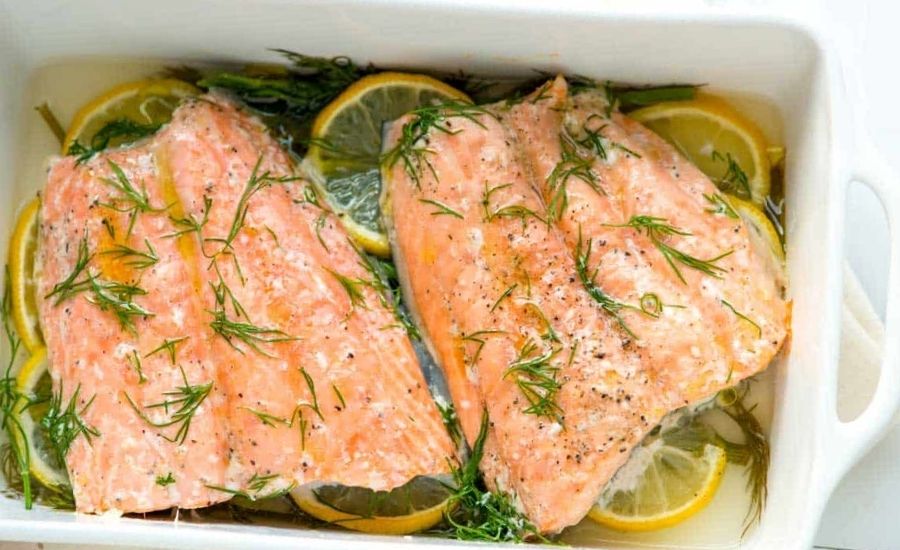
This Lemon-Dill Baked Salmon is a simple, elegant seafood dish that delivers bright citrus flavor with very little effort.
Salmon fillets are gently baked over fresh lemon slices and fragrant dill while a small amount of dry white wine or water creates a moist cooking environment.
The result is tender, flaky salmon with a delicate, fresh flavor rather than a heavily seasoned or overpowering taste.
Olive oil, salt, and freshly ground black pepper provide a clean savory foundation, while lemon and dill bring freshness to every bite.
Baking the salmon covered helps keep the fish moist and succulent, and the gentle oven temperature makes this method especially straightforward.
It is an excellent choice for a quick weeknight dinner but polished enough to serve when you want something a little more special.
A final scattering of fresh dill adds an appealing herbal finish.
A foolproof, gently baked salmon recipe infused with fresh lemon and dill, finished with a light white-wine cooking liquid for tender, flaky, flavorful fillets.


Dairy Free Juicy Lemon Dill Baked Salmon
Ingredients
Equipment
Method
- Preheat the Oven: Preheat the oven to 325°F (162°C). Set out a baking dish large enough to accommodate the salmon in one layer.
- Prepare the Salmon: Lightly coat both sides of the salmon fillets with 1 tablespoon olive oil, then season with salt and freshly ground black pepper. If desired, cut the salmon into four approximately 6-ounce fillets.
- Build the Baking Dish: Arrange the lemon slices and 4 fresh dill sprigs across the bottom of the baking dish.
- Arrange the Salmon: Place the seasoned salmon in the dish skin-side down, directly over the lemon slices and dill.
- Add the Wine: Pour ½ cup dry white wine or water into the baking dish around the salmon.
- Cover the Dish: Cover the baking dish securely with aluminum foil to create a gently enclosed cooking environment.
- Bake the Salmon: Bake for 15 to 20 minutes, depending on the thickness of the fillets. Begin checking the fish after 10 minutes, since thicker pieces may require additional cooking time.
- Check for Doneness: The salmon is ready when it flakes easily with a fork. For the most reliable check, insert an internal thermometer into the thickest part of the fish; it should register 125°F.
- Rest the Salmon: Remove the baking dish from the oven, then loosen or untuck the foil so it covers the dish loosely. Let the salmon rest on the counter for 5 minutes, allowing it to continue cooking gently.
- Finish and Serve: Scatter chopped fresh dill over the salmon and serve with some of the cooking liquid from the bottom of the dish if desired.
Notes
- Salmon thickness matters: The stated baking time is based on fillets about 1 inch thick. Thicker pieces may need a few additional minutes.
- Check early: Begin checking the salmon after 10 minutes to help prevent overcooking.
- Best doneness check: For the most reliable result, use an internal thermometer and check the thickest part of the salmon for 125°F.
- Wine choice: A light, dry white wine such as Sauvignon Blanc, Pinot Grigio, or unoaked Chardonnay works well. Water can also be used.
- Fresh or dried dill: If using dried dill, use 1 tablespoon. Place half of the lemon slices underneath the salmon and sprinkle the remaining lemon slices over the top.
- Albumin is normal: The white substance that can appear around cooked salmon is albumin and is safe to eat. If desired, gently scrape it away and spoon some of the flavorful cooking liquid over the fish.
- Resting is important: Letting the salmon sit loosely covered for 5 minutes after baking allows it to continue cooking gently before serving.
Chef’s Secret
For especially tender salmon, rely on the thermometer rather than the clock.
Because fillet thickness can vary, start checking after 10 minutes and measure the thickest section of the fish.
Removing it from the oven when that spot reaches 125°F, followed by the recommended 5-minute rest, helps you avoid relying solely on the baking time and reduces the chance of overcooking.
Serving Suggestions
Serve the salmon immediately after its short resting period with plenty of chopped fresh dill scattered over the top.
Spoon a little of the lemony cooking liquid from the bottom of the baking dish over each portion for extra moisture and flavor.
For a complete meal, pair the salmon with simple vegetable sides or a fresh salad that won’t overpower the delicate lemon-and-dill flavor.
The fillets also work well alongside cooked grains or potatoes for a more substantial dinner.
Conclusion
This Lemon-Dill Baked Salmon is an uncomplicated way to prepare tender, flaky fish with bright lemon and fresh herbal flavor.
The gentle covered baking method keeps the salmon moist while the wine or water creates a light cooking environment.
With just a handful of ingredients and a short preparation time, it makes an easy yet polished main course for both everyday dinners and more special meals.