
BakeryDiary is a recipe curation and editorial platform. We research and curate recipes from public sources, considering ratings, reviews, comments, and feedback. We then refine and present them clearly for home cooks. We are committed to an ad-free, focused experience that makes discovering and preparing recipes easier.

This gluten-free hollandaise sauce is a rich, silky addition to breakfast and brunch, bringing together the luxurious flavor of clarified butter, bright lemon juice, egg yolks, and delicate seasonings.
The sauce has a smooth, creamy texture with a buttery richness balanced by the fresh acidity of lemon and a subtle warmth from paprika.
Carefully whisking the egg yolks with lukewarm water and slowly incorporating the clarified butter creates the classic emulsion that gives hollandaise its wonderfully velvety consistency.
For an optional alcoholic variation, reduced white wine and shallot add another layer of savory flavor.
This versatile sauce pairs beautifully with poached eggs and eggs Benedict, while also complementing asparagus and salmon.
Served warm, it makes an elegant yet comforting finishing touch for a cozy homemade breakfast or brunch.
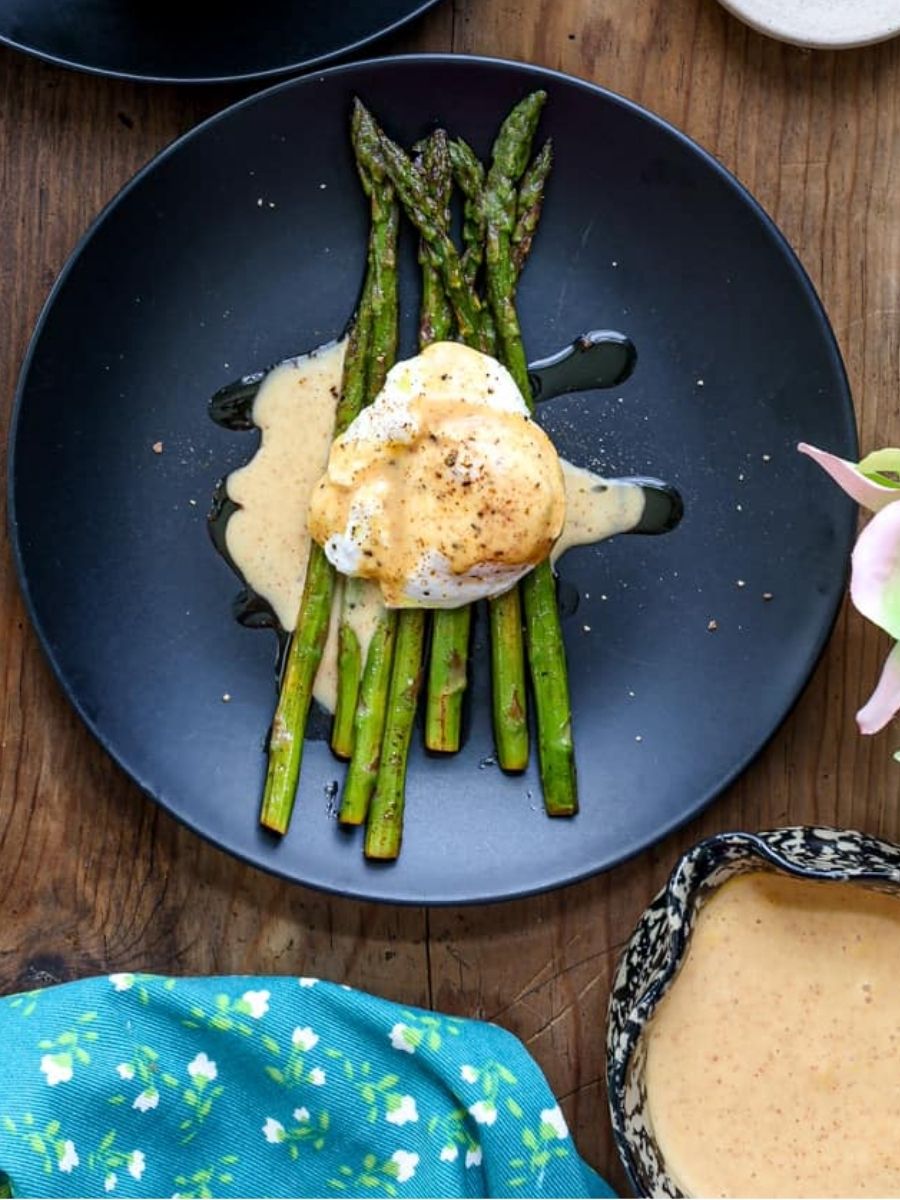

Gluten Free Classic Hollandaise Sauce
Ingredients
Equipment
Method
- Clarify the Butter: Melt the unsalted butter either directly in a pan over heat or using a bain-marie. Once completely melted, allow it to rest at room temperature and use only the clear fat from the top, leaving the milk solids behind.
- Prepare the Egg Mixture: Set up a bain-marie at approximately 45–50°C. Whisk the 4 egg yolks with the 4 tbsp. lukewarm water until the mixture becomes fluffy.
- Build the Emulsion: Once the egg mixture is light and fluffy, slowly drizzle in the clarified butter while continuing to whisk. Add the butter gradually so it emulsifies smoothly with the yolks.
- Thicken the Sauce: After all the clarified butter has been incorporated, whisk for another 30 seconds. Add the kosher salt and paprika, then continue whisking until the sauce begins to thicken.
- Keep the Sauce Warm: Hold the finished hollandaise in a warm place at approximately 35–40°C until ready to serve.
- Prepare the Shallot: Slice the shallot onion very thinly and place it in a small pot with olive oil. Sauté it lightly.
- Deglaze with Wine: Add the ⅓ cup white wine to the shallot and deglaze the pot.
- Reduce the Wine: Continue cooking until the liquid has reduced to approximately one-third of its original volume.
- Strain the Reduction: Strain the reduced wine mixture, reserving the resulting liquid.
- Replace the Water: Use the strained wine-and-shallot reduction in place of the water when mixing the egg yolks for the hollandaise.
- Drain the Eggs: Crack each egg individually into a mesh sieve and allow the loose watery portion of the white to drain away. Carefully transfer each drained egg into a bowl and set aside.
- Heat the Water: Add water to the saucepan and bring it to the point where it begins to bubble. Reduce the heat to medium-low; the water should not reach a boil.
- Create a Whirlpool: Use a spoon to move the water in a circular motion, creating a gentle whirlpool.
- Add the First Egg: Carefully slide one egg into the moving water.
- Add the Next Egg: Once the white begins to form around the first egg, slowly add the second egg.
- Cook the Eggs: Poach the eggs over medium-low heat for 3–8 minutes. After 3 minutes, once the top layer is completely covered with egg white, gently lift an egg with a slotted spoon and check its firmness by lightly pressing it with your finger.
- Chill the Eggs: Transfer the poached eggs to an ice bath while preparing any remaining eggs.
- Reheat Before Serving: Place the poached eggs in a warm water bath for 45 seconds to 1 minute to reheat them.
- Serve with Hollandaise: Serve the warm poached eggs with the prepared hollandaise sauce.
Notes
- Do not add salt to the poaching water, as the source notes that it can cause the egg whites to separate.
- Keep each drained egg separately in a bowl before poaching so they are easier to add to the water.
- For clarified butter, the source recommends melting the butter and allowing the clear fat to separate from the solids before using it.
- A piping bag can be used to clarify the butter: pour the melted butter into the bag, hang it from a hook for about 1 hour, then carefully open the tip and use the clear fat.
- If the hollandaise splits or does not thicken properly, whisk a fresh egg yolk in a new bowl over a bain-marie, then gradually whisk the old sauce into it.
- For the best result, use unsalted butter with approximately 86% fat.
- Dried onion powder can be used to enhance the sauce’s flavor.
- Keep the finished sauce warm at approximately 35–40°C rather than allowing it to become too hot.
Keep the finished sauce warm at approximately 35–40°C rather than allowing it to become too hot.
Chef’s Secret
The most useful technique for a stable hollandaise is to add the clarified butter very slowly while continuously whisking the fluffy egg-yolk mixture.
This gradual addition helps the butter and egg yolks form a smooth emulsion instead of separating.
Keeping the bain-marie around 45–50°C during this stage also follows the source method and helps you control the temperature while building the sauce.
Serving Suggestions
Serve the warm hollandaise generously over poached eggs for a classic breakfast or use it as the finishing sauce for eggs Benedict.
It also works particularly well with asparagus and salmon, as noted in the original recipe. For a simple brunch plate, pair the sauced eggs with your preferred breakfast accompaniments and finish with a light sprinkle of paprika if desired.
The optional white-wine-and-shallot version is especially suitable when you want a deeper, more savory flavor.
Conclusion
This gluten-free hollandaise brings together clarified butter, egg yolks, lemon juice, and gentle seasoning in a smooth, luxurious sauce.
With careful whisking and controlled temperatures, it can become a beautifully creamy finishing touch for poached eggs, eggs Benedict, asparagus, or salmon.
The optional wine and shallot variation provides an additional way to adapt the sauce while keeping the same classic, rich character.