
BakeryDiary is a recipe curation and editorial platform. We research and curate recipes from public sources, considering ratings, reviews, comments, and feedback. We then refine and present them clearly for home cooks. We are committed to an ad-free, focused experience that makes discovering and preparing recipes easier.
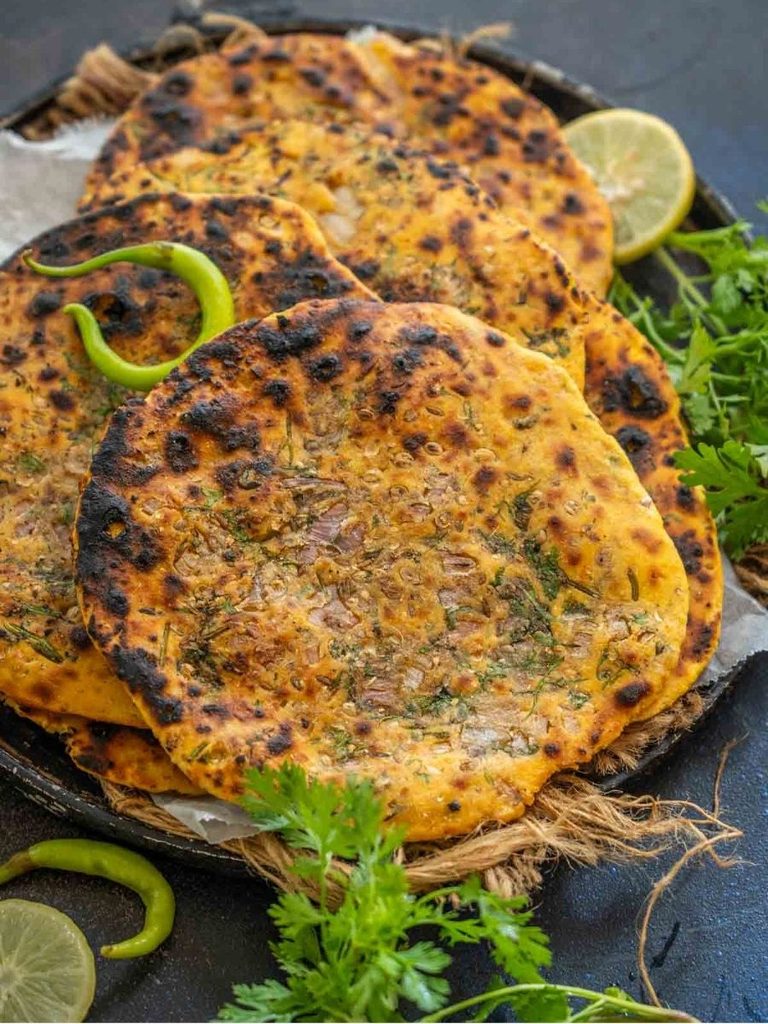
Missi Roti is a hearty North Indian flatbread made with a flavorful blend of chickpea flour, whole wheat flour, and all-purpose flour.
Its naturally nutty taste is enhanced with turmeric, red chili, kasuri methi, ajwain, fresh ginger, and green chilies, while a fragrant topping of toasted coriander and cumin adds extra warmth and texture.
Finely chopped onion and fresh cilantro give each bite a pleasant savory freshness.
The rotis are kept slightly thicker than regular chapatis, creating a tender, pillowy interior with beautifully browned spots on the outside.
Traditionally enjoyed hot and generously finished with ghee or butter, they make a satisfying accompaniment to Indian meals.
For a vegan finish, coconut oil can be used instead. With a short resting period and several cooking options, this recipe is a practical way to prepare flavorful homemade missi roti.
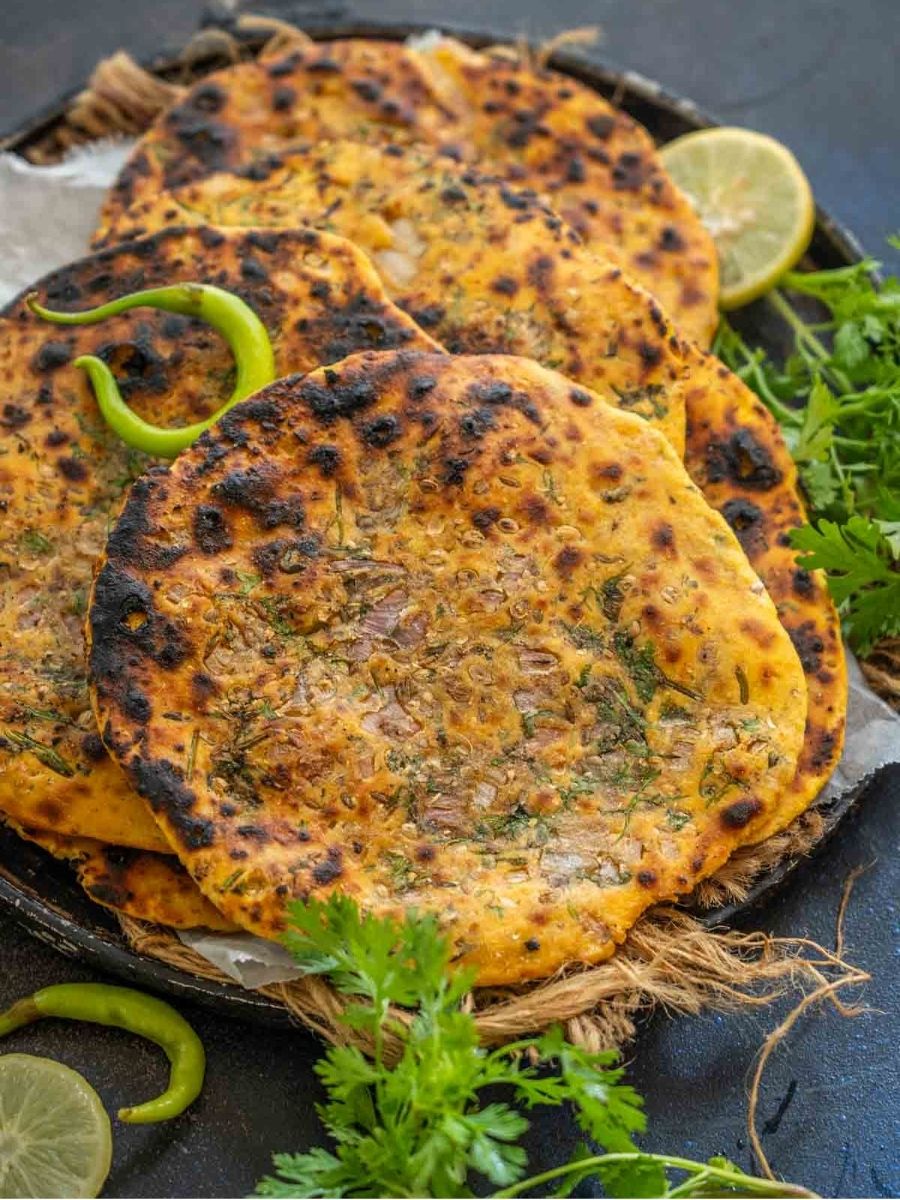

Traditional Indian Missi Roti
Ingredients
Equipment
Method
- Combine the Dry Ingredients: Add the chickpea flour, whole wheat flour, all-purpose flour, baking powder, turmeric powder, red chili powder, salt, oil, kasuri methi, ajwain, grated ginger, and chopped green chilies to a large bowl or parat.
- Mix Thoroughly: Work the mixture well with your fingertips so all the ingredients and seasonings are evenly distributed; thorough mixing prevents concentrated pockets of salt or chili in the finished roti.
- Knead the Dough: Add water gradually while kneading until a soft dough forms; the dough should be slightly softer than regular roti dough because the besan will absorb more water as it rests.
- Rest the Dough: Cover the dough with a kitchen towel and let it rest for 15 minutes so the wheat gluten can relax and the besan can fully hydrate.
- Toast the Seeds: Heat a dry pan over medium heat and roast the coriander seeds and cumin seeds until they become slightly browned.
- Crush the Seeds: Transfer the roasted seeds to a mortar and pestle and crush them into a coarse powder.
- Mix the Topping: Combine the coarse roasted seed mixture with the finely chopped onions and cilantro, then set aside.
- Divide the Dough: Divide the rested dough into 8 equal portions and shape each portion into a smooth ball.
- Coat with Topping: Take one dough ball and press it into the prepared topping mixture so the topping adheres to one side.
- Position the Dough: Place the topped side face-down on the rolling surface and dust the dough lightly with dry flour.
- Roll the Roti: Roll the dough with a rolling pin into an approximately 4-inch disc, rolling evenly from the center outward and rotating it a quarter turn between strokes; keep the roti slightly thicker than a regular chapati.
- Heat the Tawa: Place a tawa over high heat and allow it to become hot.
- Moisten the Roti: Apply water to the upper surface of the rolled roti.
- Place on the Tawa: Carefully transfer the roti onto the hot tawa with the water-coated side facing down.
- Cook Over the Flame: Turn the tawa upside down so the roti faces the direct flame, then cook until brown spots develop, moving the roti as needed so it cooks evenly across the surface.
- Finish Cooking: Turn the tawa back upright and cook the roti for another 1 minute.
- Apply Ghee: Generously slather the hot roti with ghee and serve immediately, or use butter or coconut oil for the appropriate variation.
- Start Cooking: Place the rolled roti on a hot tawa and cook for about 20 seconds, or until small bubbles begin appearing on the surface.
- Flip the Roti: Turn the roti over and brush the cooked side with ghee.
- Cook the First Side: Continue cooking for another 30 seconds, then flip the roti again.
- Encourage Puffing: Gently press around the edges with a folded kitchen towel or flat spatula as the roti cooks; it should begin puffing in places.
- Finish the Second Side: Brush the second side with ghee and cook for another 20–30 seconds, aiming for deep golden-brown spots on both sides rather than a pale surface.
- Preheat the Oven: Preheat the oven to its highest possible temperature setting.
- Arrange the Roti: Place the rolled missi roti directly on a baking sheet with the topping side facing upward.
- Bake the Roti: Bake for approximately 2–4 minutes, or until the roti puffs up and begins turning golden brown.
- Finish and Serve: Brush the hot roti generously with ghee or butter, or use coconut oil for a vegan version, and serve hot.
Notes
- Missi roti dough should be slightly softer than regular roti dough because chickpea flour absorbs water while resting.
- Mix the dough ingredients thoroughly before adding water so the salt and spices are evenly distributed.
- Rest the dough for 15 minutes before rolling to allow the besan to hydrate and the dough to relax.
- Keep the rotis slightly thicker than regular chapatis for a softer, more substantial interior.
- Toast the coriander and cumin seeds until slightly browned, then crush them coarsely for the topping.
- The roti is naturally somewhat dry in texture, so it is traditionally served generously coated with ghee or butter.
- For a vegan version, replace the ghee or butter with coconut oil.
- When cooking on a tawa, look for deep golden-brown spots rather than simply a pale cooked surface.
- Serve missi roti hot for the best texture and flavor.
Chef’s Secret
The most important detail is getting the dough consistency right.
Make it slightly softer than your usual roti dough because the chickpea flour continues absorbing moisture during the 15-minute resting period.
If the dough feels tight before resting, the finished missi roti can become hard and dry.
A properly soft dough helps produce rotis with a more tender, pillowy center while still allowing the outside to develop those characteristic golden-brown spots.
Serving Suggestions
Serve missi roti hot and generously brushed with ghee or butter for a rich, traditional finish, or use coconut oil for a vegan option.
The spiced, nutty flatbread works well as part of an Indian meal alongside your favorite curry or vegetable dish.
For extra freshness, serve it with chopped cilantro or a simple accompaniment of your choice.
Because the roti is best enjoyed warm, apply the finishing fat just before serving and bring it to the table immediately.
Conclusion
Missi Roti is a flavorful Indian flatbread that brings together chickpea flour, wheat flour, aromatic spices, fresh herbs, and a fragrant toasted-seed topping.
Its slightly thick texture, savory flavor, and golden-brown finish make it a satisfying addition to a traditional meal.
With a short resting period and flexible cooking methods, this recipe provides an easy way to prepare homemade missi roti and enjoy it fresh from the tawa or oven.