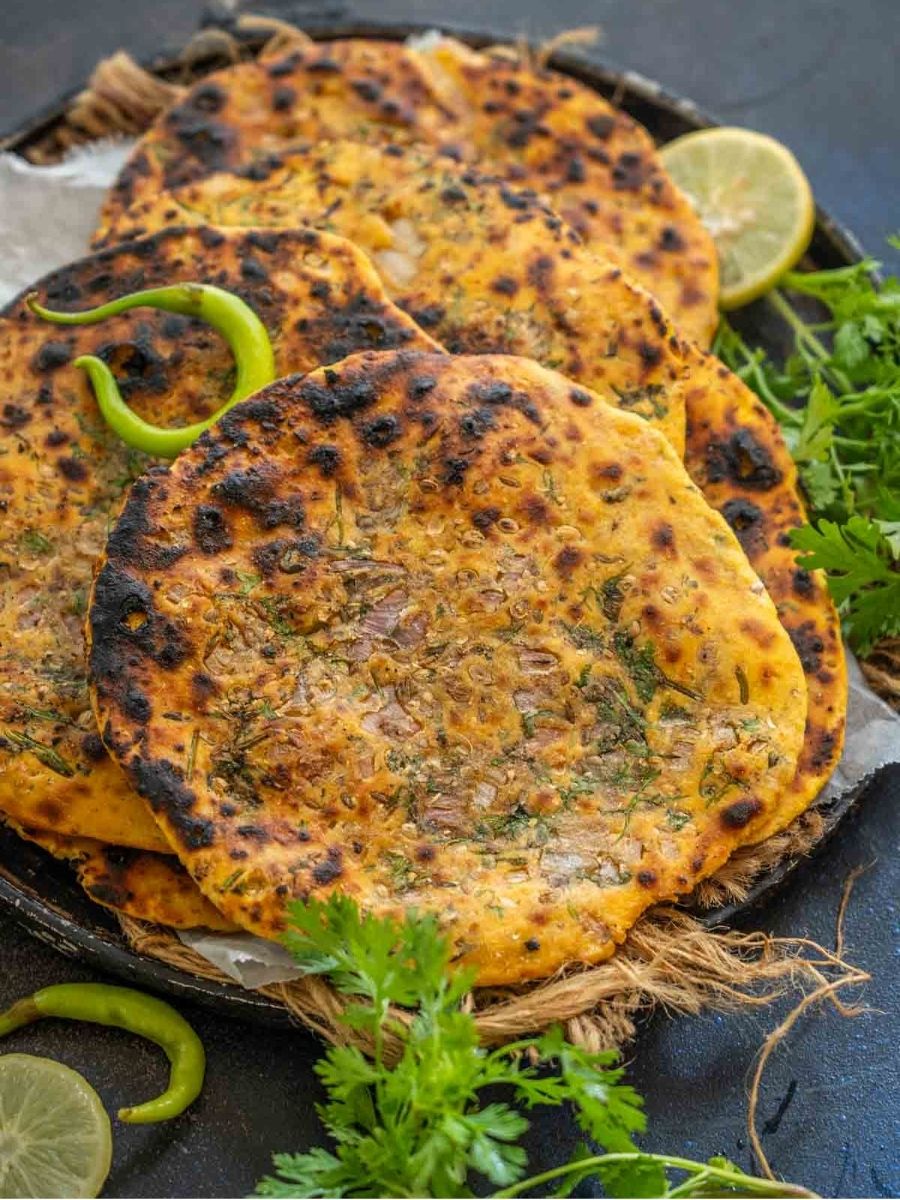

Ingredients
Equipment
Method
Make the Dough
- Combine the Dry Ingredients: Add the chickpea flour, whole wheat flour, all-purpose flour, baking powder, turmeric powder, red chili powder, salt, oil, kasuri methi, ajwain, grated ginger, and chopped green chilies to a large bowl or parat.
- Mix Thoroughly: Work the mixture well with your fingertips so all the ingredients and seasonings are evenly distributed; thorough mixing prevents concentrated pockets of salt or chili in the finished roti.
- Knead the Dough: Add water gradually while kneading until a soft dough forms; the dough should be slightly softer than regular roti dough because the besan will absorb more water as it rests.
- Rest the Dough: Cover the dough with a kitchen towel and let it rest for 15 minutes so the wheat gluten can relax and the besan can fully hydrate.
Prepare the Topping
- Toast the Seeds: Heat a dry pan over medium heat and roast the coriander seeds and cumin seeds until they become slightly browned.
- Crush the Seeds: Transfer the roasted seeds to a mortar and pestle and crush them into a coarse powder.
- Mix the Topping: Combine the coarse roasted seed mixture with the finely chopped onions and cilantro, then set aside.
Shape the Rotis
- Divide the Dough: Divide the rested dough into 8 equal portions and shape each portion into a smooth ball.
- Coat with Topping: Take one dough ball and press it into the prepared topping mixture so the topping adheres to one side.
- Position the Dough: Place the topped side face-down on the rolling surface and dust the dough lightly with dry flour.
- Roll the Roti: Roll the dough with a rolling pin into an approximately 4-inch disc, rolling evenly from the center outward and rotating it a quarter turn between strokes; keep the roti slightly thicker than a regular chapati.
Cook on a Tawa Over Direct Flame
- Heat the Tawa: Place a tawa over high heat and allow it to become hot.
- Moisten the Roti: Apply water to the upper surface of the rolled roti.
- Place on the Tawa: Carefully transfer the roti onto the hot tawa with the water-coated side facing down.
- Cook Over the Flame: Turn the tawa upside down so the roti faces the direct flame, then cook until brown spots develop, moving the roti as needed so it cooks evenly across the surface.
- Finish Cooking: Turn the tawa back upright and cook the roti for another 1 minute.
- Apply Ghee: Generously slather the hot roti with ghee and serve immediately, or use butter or coconut oil for the appropriate variation.
Cook on a Tawa Like a Regular Roti
- Start Cooking: Place the rolled roti on a hot tawa and cook for about 20 seconds, or until small bubbles begin appearing on the surface.
- Flip the Roti: Turn the roti over and brush the cooked side with ghee.
- Cook the First Side: Continue cooking for another 30 seconds, then flip the roti again.
- Encourage Puffing: Gently press around the edges with a folded kitchen towel or flat spatula as the roti cooks; it should begin puffing in places.
- Finish the Second Side: Brush the second side with ghee and cook for another 20–30 seconds, aiming for deep golden-brown spots on both sides rather than a pale surface.
Bake in the Oven
- Preheat the Oven: Preheat the oven to its highest possible temperature setting.
- Arrange the Roti: Place the rolled missi roti directly on a baking sheet with the topping side facing upward.
- Bake the Roti: Bake for approximately 2–4 minutes, or until the roti puffs up and begins turning golden brown.
- Finish and Serve: Brush the hot roti generously with ghee or butter, or use coconut oil for a vegan version, and serve hot.
Notes
- Missi roti dough should be slightly softer than regular roti dough because chickpea flour absorbs water while resting.
- Mix the dough ingredients thoroughly before adding water so the salt and spices are evenly distributed.
- Rest the dough for 15 minutes before rolling to allow the besan to hydrate and the dough to relax.
- Keep the rotis slightly thicker than regular chapatis for a softer, more substantial interior.
- Toast the coriander and cumin seeds until slightly browned, then crush them coarsely for the topping.
- The roti is naturally somewhat dry in texture, so it is traditionally served generously coated with ghee or butter.
- For a vegan version, replace the ghee or butter with coconut oil.
- When cooking on a tawa, look for deep golden-brown spots rather than simply a pale cooked surface.
- Serve missi roti hot for the best texture and flavor.